How to Use Adapalene and Benzoyl Peroxide Together
By Tutiba Education Team
Medically reviewed by Dr. Aya Elbrashy
Skin & Beauty Nutrition Specialist with 10+ years of experience, teaching an evidence-based curriculum.
Last reviewed November 7, 2026
Apply a thin layer once a day over the whole acne area, as one combined gel or two products. Irritation is most likely in the first four weeks; allow up to 3 months, and refer in pregnancy.
To use adapalene and benzoyl peroxide together, apply a thin layer once a day over the whole area where acne appears, either as one fixed-dose gel (adapalene 0.1 % with benzoyl peroxide 2.5 %) or as two separate products. Dryness and stinging may occur and are most likely in the first four weeks; allow up to 3 months of daily use before judging the result. Do not recommend the pair in pregnancy or when a pregnancy is planned; refer to a doctor.
Key points
Use it once a day, as a thin layer over the whole affected area, not on single spots.
The trial evidence is for the fixed-dose 0.1 %/2.5 % gel; two separate products are a reasonable alternative but were not tested against it.
Both gels are sold over the counter in the US (their labels note they were previously prescription-only); check the status in your country, and where they are prescription-only, refer to a doctor.
Irritation is most likely in the first four weeks: add a moisturizer, then drop to every other day if needed. Allow up to 3 months; refer if there is no improvement by then.
Not in pregnancy or when planning one; check with a doctor first when breastfeeding.
Why the two are paired
The 2024 American Academy of Dermatology (AAD) acne guideline makes strong recommendations for both benzoyl peroxide and topical retinoids, and lists "combining topical therapies with multiple mechanisms of action" as good practice (Reynolds et al., 2024). The retinoid works on clogged pores and inflammation; benzoyl peroxide "can remove the bacteria that cause acne", in the AAD's words.
The strongest numbers come from the fixed-dose gel (a single product combining both medications). This was proven in two 12-week controlled trials involving patients with mostly moderate acne.
Study 1: 517 participants (median age 15)
Study 2: 1,668 participants (median age 16)
To be considered a success, a patient's skin had to show a two-grade improvement and be rated as "clear" or "almost clear". The US prescribing information reports these rates:
Study 1: Combined gel (adapalene 0.1% + benzoyl peroxide 2.5%): 21.5% | Adapalene 0.1% alone: 12.2% | Benzoyl peroxide 2.5% alone: 12.1% | Placebo (gel base without active ingredients): 5.6%.
Study 2: Combined gel (adapalene 0.1% + benzoyl peroxide 2.5%): 30.1% | Adapalene 0.1% alone: 19.8% | Benzoyl peroxide 2.5% alone: 22.2% | Placebo (gel base without active ingredients): 11.3%.
Important Context & Expert Advice
Combined vs. Separate: These trials only tested the all-in-one gel containing both drugs. None of the sources compared using two separate products against the combined gel. Therefore, the proven extra benefit specifically applies to the combined gel only.
Skin of Color: Even without direct comparison trials, the American Academy of Dermatology (AAD) still suggests using two separate products for darker skin tones. Their advice states: "This means buying two different products, but this combination works well in skin of color" (AAD).
Why adapalene, and not tretinoin, mixes with benzoyl peroxide
In a laboratory test by researchers from a company that makes adapalene, adapalene 0.1 % gel and tretinoin 0.025 % gel were each mixed with a 10 % benzoyl peroxide lotion and exposed to light for 24 hours. Adapalene showed "a remarkable stability" with or without light, while with benzoyl peroxide and light more than 50 % of the tretinoin broke down in about 2 hours and 95 % in 24 hours (Martin et al., 1998). This is a manufacturer-authored lab study, not a clinical trial, but it supports pairing adapalene, rather than tretinoin, with benzoyl peroxide. A client on prescription tretinoin should ask the prescriber how to time benzoyl peroxide instead of layering the two.
One gel or two products: a decision table
Client situation | Choose | Why |
|---|---|---|
Facial acne, aged 12 or over, wants the simplest routine | Fixed-dose adapalene 0.1 %/benzoyl peroxide 2.5 % gel, once daily in the evening | The trial data above are for this gel; the UK label gives once a day in the evening |
Already uses a benzoyl peroxide product and tolerates it | Keep it in the morning and add adapalene 0.1 % gel at night | Practical judgement: it adds one new product and spaces two irritants; no study in these sources compared schedules |
Darker skin that marks after spots | Either route, keeping benzoyl peroxide at 2.5 % (the fixed gel already is) | AAD: the pair "works well in skin of color"; stronger benzoyl peroxide products "can cause dryness and flaking, which can worsen acne"; every other day if 2.5 % irritates |
Very sensitive skin, or known sensitivity to benzoyl peroxide | Do not recommend the pair; refer to a doctor | The US over-the-counter label for the combination gel says do not use in either case |
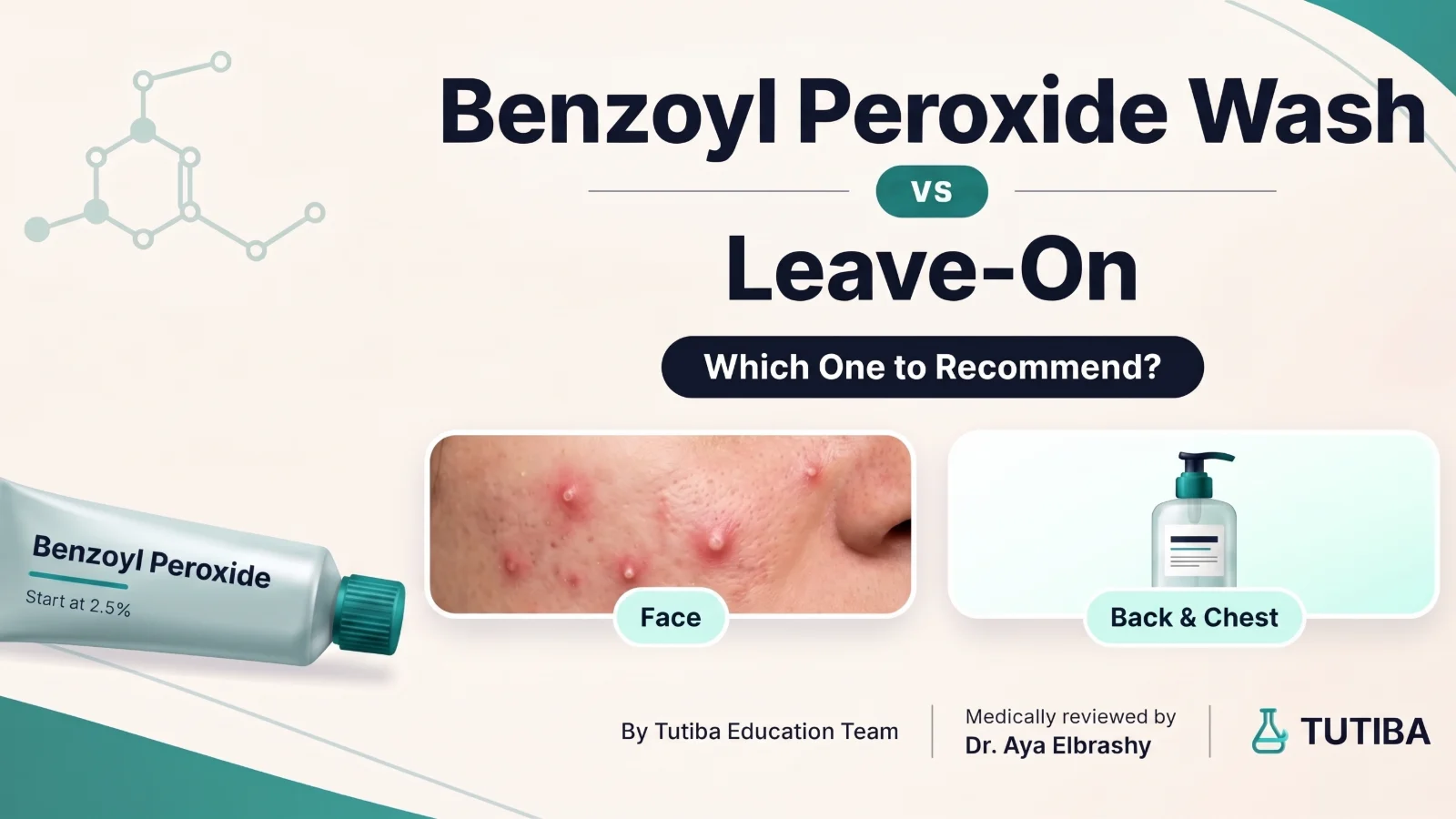
Bleached pillowcases or towels are a worry | A benzoyl peroxide wash with adapalene at night (less contact with pillowcases, but rinse well and use white towels, as a wash can still bleach them), or let any gel dry fully before contact | Labels warn of bleached hair and dyed fabrics; a rinse-off wash is practical judgement (see our wash vs leave-on guide) |
Prescribed tretinoin, not adapalene | Do not layer benzoyl peroxide on top; ask the prescriber how to schedule it | In the lab study, benzoyl peroxide plus light broke down most of the tretinoin within hours |
Pregnant or planning a pregnancy | No adapalene; refer to a doctor for acne treatment | The UK label contraindicates the combination gel in pregnancy and in women planning one |
Under 12 years | Refer to a doctor | The US over-the-counter combination gel says do not use under 12; the adapalene gel says ask a doctor |
How to apply them: step by step
Step 1: Clean and dry the skin
Wash gently and pat dry before applying. The labels advise avoiding medicated or abrasive soaps and cleansers, strongly drying cosmetics, and products with "high concentrations of alcohol, astringents, spices, or limes" while using the combination.
Step 2: Use the right amount over the whole area
The prescribing information gives "a pea-sized amount for each area of the face (e.g., forehead, chin, each cheek)", as a thin film over the affected areas of the face and/or trunk. The over-the-counter adapalene leaflet adds that the gel "is not a spot treatment and should not be used to treat a single pimple". Keep it away from the eyes, lips and mucous membranes, and off cut, eczematous or sunburned skin.
Step 3: Once a day, at a set time
For the fixed-dose gel, the UK product information says once a day in the evening, on clean and dry skin. With two products, applying benzoyl peroxide in the morning and adapalene at night is one way to split them; this is practical judgement to spread the irritation load, because no source here tested one schedule against another. More is not better: the adapalene label says "do not use more than one time a day" and that applying more "will not provide faster or better results, but may worsen skin irritation."
Step 4: Moisturizer by day, sunscreen outdoors
DermNet suggests a daytime sunscreen and moisturizer combination against retinoid sun sensitivity and dryness (DermNet). The over-the-counter combination gel label says to limit sun exposure, including tanning beds, and, if going outside, to "apply sunscreen after using this product". Avoid waxing on treated skin.
Step 5: If it stings, step down in order
The UK label lists the options: apply non-comedogenic moisturizers, use the gel less often ("e.g. every other day"), suspend it for a while, or stop. The over-the-counter label adds another option that matters for the two-product route: irritation may be reduced "by using only one topical acne medication at a time". So a client on two products can pause one, settle the skin, then reintroduce it; how long to pause is practical judgement, as no label gives a number.
What to expect and when
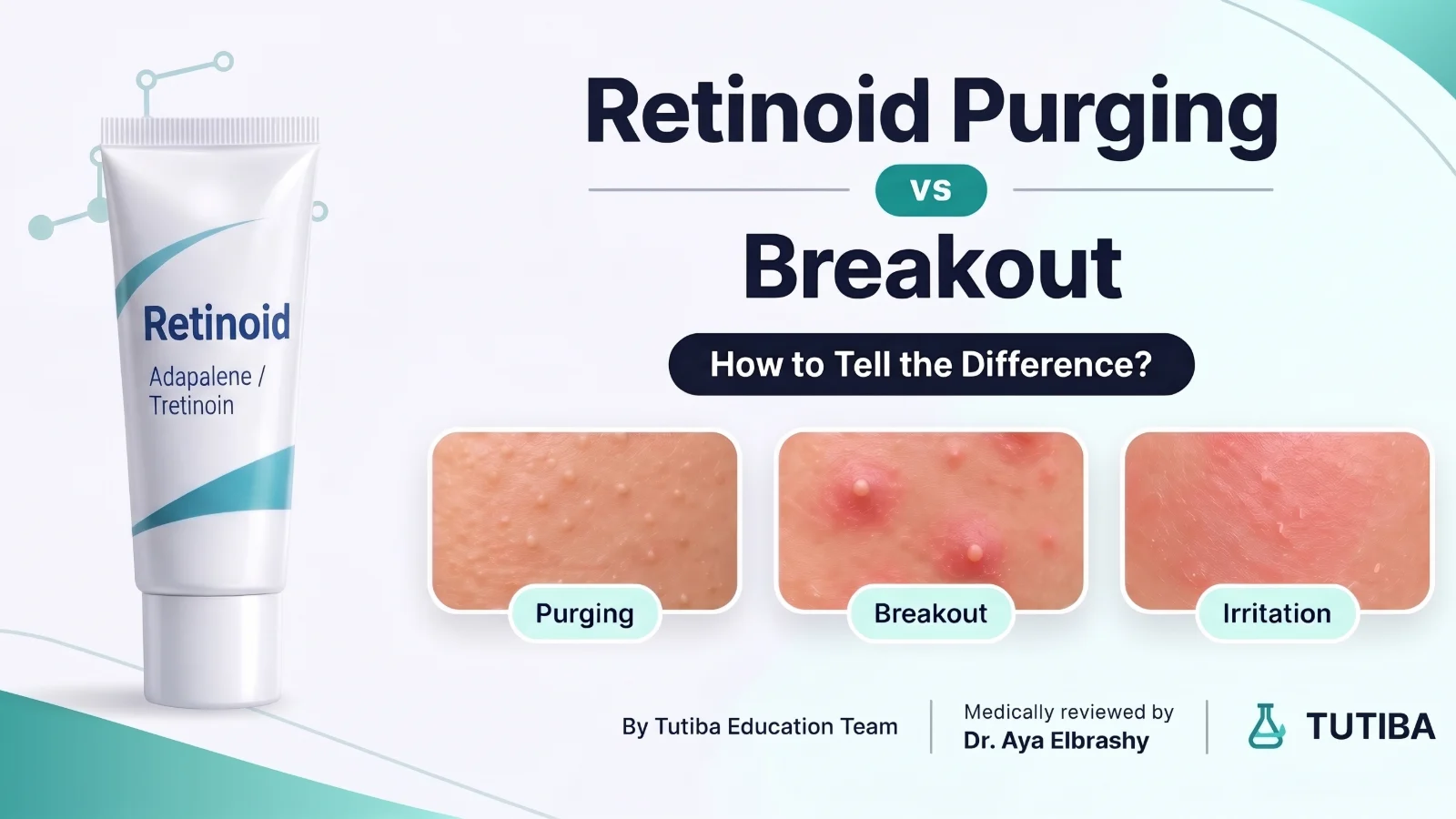
Irritation such as redness, scaling, dryness and stinging is "most likely to occur during the first four weeks of treatment", is mostly mild to moderate and "usually lessen[s] with continued use", according to the prescribing information. The over-the-counter adapalene label also warns that acne "may appear to worsen before it improves (this is normal)" in the early weeks; our guide to retinoid purging vs breakout covers how to tell that from a reaction to another product.
The UK label states that early signs of improvement "usually appear after 1 to 4 weeks". Both over-the-counter labels say it may take up to 3 months of once-daily use to see results, and to stop and ask a doctor if there is no improvement after 3 months.
Example: a 16-year-old with blackheads and red spots on the forehead and chin starts the fixed-dose gel each evening. By week 2 the skin is dry and tight. Advise a non-comedogenic moisturizer and, if it still stings, every other evening, then back to nightly once it settles. Book a review at 12 weeks, and refer if the acne is no better then. Before starting, confirm they are not pregnant or planning a pregnancy.
Counselling: questions to ask and mistakes to correct
Questions before you recommend
Are you pregnant, trying to conceive or breastfeeding?
What else are you using on your skin: scrubs, toners, another retinoid, a prescription cream?
Has an acne product burned or peeled your skin before, or do you have eczema? DermNet notes topical retinoids can make eczema worse.
Is the acne on your face only, or also on your back and chest?
Do you get dark marks where spots heal?
Common mistakes, each with a one-line correction
Dabbing it on spots. "Spread a thin layer over the whole area where you get acne, not just the spots you see."
Using it twice a day to speed things up. "Once a day is the dose; more won't work faster and may irritate more."
Adding a scrub or alcohol toner. "These can add to the irritation; keep the routine to a gentle cleanser, moisturizer and sunscreen."
Giving up in week 2. "Dryness and an early flare can happen; judge it at up to 3 months."
Ruined pillowcases. "Let it dry completely, and use white pillowcases and towels."
The last correction is practical judgement built on the labels: benzoyl peroxide can bleach hair and dyed fabrics, and the AAD says it "will bleach clothing, sheets, pillow cases, and towels".
Pregnancy, breastfeeding and skin of colour
Pregnancy: the UK product information lists pregnancy and women planning a pregnancy as contraindications for the adapalene/benzoyl peroxide gel, and says treatment should be discontinued if the patient becomes pregnant. The US adapalene label says to stop and ask a doctor if pregnancy occurs or is planned. Do not recommend adapalene in either form; refer to a doctor.
The labels differ on breastfeeding. The UK product information says the combination gel "can be used during breast-feeding" but should not be applied to the chest. The US prescribing information advises caution, and the over-the-counter labels say to ask a doctor before use. The practical course is a doctor's check first, and never on the chest or nipple area.
For skin of colour, the AAD notes that acne "is often accompanied by dark spots or patches called hyperpigmentation". Keeping irritation low matters: the AAD advises starting with 2.5 % benzoyl peroxide, because stronger products "can cause dryness and flaking, which can worsen acne", and using it every other day if 2.5 % irritates. One worry you can settle: the AAD calls the idea that benzoyl peroxide causes light spots on the skin a myth.
Example: a 24-year-old with brown skin and dark marks from old spots has been using a 10 % benzoyl peroxide gel that leaves the skin flaky. Suggest moving to a 2.5 % product in the morning and adding adapalene 0.1 % at night once the flaking settles, with daily sunscreen. Confirm first that they are not pregnant or planning a pregnancy.
When to refer
Signs of allergy. Itching with rash, hives, swelling of the lips or eyelids, or shortness of breath: the adapalene label says stop and ask a doctor. In our judgement, trouble breathing needs emergency care.
Severe or worsening irritation. The labels say to stop and ask a doctor.
No improvement after 3 months of correct once-daily use.
Severe, scarring or distressing acne. The AAD guideline strongly recommends oral isotretinoin, a prescription-only medicine, for acne that is severe, scarring, causing psychosocial burden or failing standard therapy.
Pregnancy, planned pregnancy, children under 12, very sensitive skin, or a client already using another acne medicine: the labels say do not use, or ask a doctor or pharmacist first.
The acne section of Skin and Hair Care Diploma Part 2 puts this pairing in context with cleansers, topical and oral antibiotics, and isotretinoin.
Can I apply adapalene and benzoyl peroxide at the same time?
The fixed-dose gel puts both in one product, and in a manufacturer-authored laboratory test adapalene stayed stable when mixed with benzoyl peroxide, unlike tretinoin. No study in these sources tested layering two separate products. Labels warn that irritation is more likely with more than one topical acne medicine, so using them at different times of day is a practical, untested option.
Should benzoyl peroxide go in the morning and adapalene at night?
That split is a practical choice when using two products, because it spaces two irritating products. No study in these sources compared it with using both in the evening, and the UK label for the combined gel says once a day in the evening.
How long does adapalene with benzoyl peroxide take to work?
Early signs of improvement usually appear after 1 to 4 weeks, according to the UK label. The US over-the-counter labels say it may take up to 3 months of once-daily use, and to ask a doctor if there is no improvement by then.
Can I use adapalene and benzoyl peroxide while pregnant?
No. The UK product information contraindicates the combination gel in pregnancy and in women planning a pregnancy. Ask a doctor about acne treatment instead.
Why is my skin dry and red after starting adapalene and benzoyl peroxide?
Redness, scaling, dryness and stinging are most likely in the first four weeks and usually lessen with continued use. Add a non-comedogenic moisturiser and use it every other day if needed; stop and ask a doctor if irritation is severe or gets worse.
Learn more: Skin and Hair Care Diploma Part 2 covers acne types, treatment approaches, topical and oral antibiotics, and isotretinoin
Sources
- 1.DailyMed: Adapalene and benzoyl peroxide gel 0.1%/2.5%, US prescribing information — dailymed.nlm.nih.gov, accessed 2026-11-05
- 2.DailyMed: Adapalene gel 0.1%, US over-the-counter Drug Facts label — dailymed.nlm.nih.gov, accessed 2026-11-05
- 3.DailyMed: Adapalene 0.1% and benzoyl peroxide 2.5% gel, US over-the-counter Drug Facts label — dailymed.nlm.nih.gov, accessed 2026-11-05
- 4.emc: Adapalene/Benzoyl peroxide 0.1% w/w, 2.5% w/w Gel, UK Summary of Product Characteristics — medicines.org.uk, accessed 2026-11-05
- 5.American Academy of Dermatology: 10 tips for clearing acne in darker skin tones — aad.org, accessed 2026-11-05
- 6.DermNet: Topical retinoids — dermnetnz.org, accessed 2026-11-05
- 7.Martin B et al. Chemical stability of adapalene and tretinoin when combined with benzoyl peroxide. Br J Dermatol 1998 — pubmed.ncbi.nlm.nih.gov, accessed 2026-11-05
- 8.Reynolds RV et al. Guidelines of care for the management of acne vulgaris. J Am Acad Dermatol 2024 — pubmed.ncbi.nlm.nih.gov, accessed 2026-11-05