Skin care · All levels

Skin and Hair Care Diploma Part 1

  • The objective of this diploma is to equip you with the skills to address various cosmetic concerns encountered in a wide range of settings, including pharmacy settings or otherwise, enabling you to assess and recommend the most appropriate products.
  • Furthermore, you will gain the ability to critically evaluate beauty products, gaining insight into the key factors to consider during the evaluation process.
  • Each section or topic covered in the diploma will delve into three primary aspects:
    1. Firstly, a thorough explanation of the scientific underpinnings of the subject or the specific skin issue at hand.
    2. Next, we will explore the active ingredients utilized in treating these skin concerns.
    3. Finally, we will apply this scientific knowledge practically by examining cosmetic products from leading global brands such as La Roche-Posay, Bioderma, Avene, Isispharma, CeraVe, The Ordinary, Uriage, Vichy, Skin ceutical , Paula's Choice and others.
  • This diploma comprises four parts, all accessible on this platform. Both the first and second parts comprehensively cover skin-related topics, while the third part focuses on hair. The fourth and final part is dedicated to body care.

Let's embark on this journey together, starting with the first part.

9 hr 19 min video
All levels
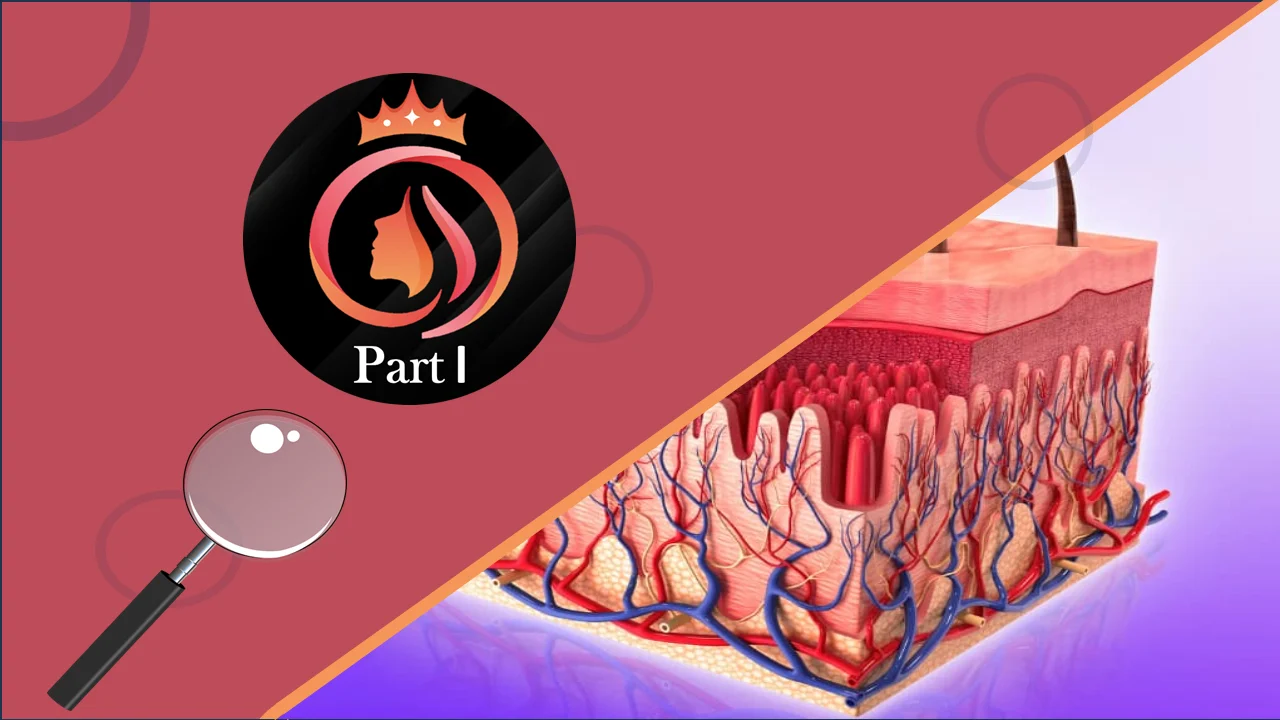
Skin and Hair Care Diploma Part 1 course cover

Learning outcomes

Part 1 / The Scientific Foundation of cosmeceutics : Understanding the Basics.

Part 1 / Hyaluronic acid: Types, impact of particle size on efficacy and practical application to products on the market.

Part 1 / Collagen: Various ways to harness its benefits, influencing factors, and practical application to products on the market.

Part 1 / Understanding the difference between skin type and skin condition.

Part 1 / The bases on which the skin types are based.

Part 1 / The basic skin care steps.

Part 1 / Knowing the appropriate skin cleanser for the client by looking at its ingredients list and being able to describe more suitable alternatives.

Part 1 / Understanding Micellar Water and practical application to products on the market.

Part 1 / Understanding Toner and practical application to products on the market.

Part 1 / Understanding the Science of Skin Exfoliation.

Part 1 / The different methods of physical peeling and practical application to the products on the market.

Part 1 / All types of chemical peels, the appropriate type for each skin, and practical application to products on the market.

Part 1 / Peeling and customer complaints that you need to know the answer to.

Part 1 / Vitamin A skin therapeutic role.

Part 1 / Factors that determine the effectiveness of a vitamin A product.

Part 1 / All essential vitamin A derivatives (Retinoic acid, Retinol, Retinal, etc.), and practical application to products on the market.

Part 1 / All synthetic vitamin A derivatives, and practical application to products on the market.

Part 1 / Understanding Carbon Peeling and Laser Peeling.

Part 1 / Knowing how to perform a sensitivity test for cosmetic products.

Part 1 / Understanding the Science of Skin Hydration.

Part 1 / Understanding the difference between skin hydration and skin moisturization.

Part 1 / Scientific classification of moisturizing active ingredients.

Part 1 / The ideal moisturizer and practical application to products on the market for all skin types.

Part 1 / How to know the active ingredients in a moisturizing product just by looking at its name.

Part 1 / Understanding the differences between pure and derivative forms of vitamin C in terms of their advantages and disadvantages.

Part 1 / Understanding the differences between pure and derivative forms of vitamin E in terms of their advantages and disadvantages.

Part 1 / Understanding the role of amino acids in skin care products.

Part 2 / Understanding the causes of hyperpigmentation and how to prevent its occurrence.

Part 2 / Understanding the types of hyperpigmentation and the correct way to deal with each type.

Part 2 / Understanding the process of melanogenesis.

Part 2 / The active ingredients used in hyperpigmentation treatment, and a practical application to the products on the market.

Part 2 / The active ingredients used in hyperpigmentation treatment, and a practical application to the products on the market.

Part 2 / Understanding the process of acne formation.

Part 2 / Understanding all types of acne and the correct way to treat each type.

Part 2 / Understanding the benefits of niacinamide for the skin and how its concentration determines its effectiveness.

Part 2 / Knowing the causes of wrinkles and how to prevent and treat them.

Part 2 / Knowing the scientific basis of sunscreens.

Part 2 / Understanding the active ingredients used for sun protection and practical application to products in the market.

Part 3 / Understanding the hair composition and types.

Part 3 / Understanding the chemical bonds in hair and the impact of hair care tools and products on them.

Part 3 / Understanding the hair growth cycle.

Part 3 / Understanding the scientific basis for hair care products.

Part 3 / Understanding the types of shampoos and their effects on hair.

Part 3 / Understanding all types of hair moisturizers.

Part 3 / Understanding the scientific basis of hair dyes.

Part 3 / Understanding all types of hair dyes and practical application to the products on the market.

Part 3 / Learning about all hair straightening methods.

Part 3 / Understanding the types of dandruff, the active ingredients used in its treatment, and practical application to products on the market.

Part 3 / A detailed explanation of all types of hair loss.

Part 3 / How to diagnose hair loss and the specific laboratory tests associated with it.

Part 3 / Explanation of hair loss treatment products and hair supplements.

Part 4 / Understand the biological function of sweat and the different types of sweat glands.

Part 4 / Explain the mechanisms of action for deodorants and antiperspirants.

Part 4 / Identify the active ingredients in deodorants and antiperspirants and their specific roles.

Part 4 / Differentiate between various types of hyperhidrosis and appropriate management strategies.

Part 4 / Assess the effectiveness of antiperspirant and deodorant forms such as roll-ons, creams, sticks, and sprays.

Part 4 / Understand the scientific evidence regarding the relationship between aluminum salts in antiperspirants and breast cancer.

Part 4 / Evaluate the scientific basis behind product claims regarding protection duration (e.g., 24-hour, 48-hour).

Part 4 / Learn the correct way to apply deodorants and antiperspirants for optimal results.

Part 4 / Apply knowledge of sweating conditions to select and use suitable products scientifically.

Part 4 / Assess deodorant and antiperspirant products from a scientific perspective, considering active ingredients and efficacy.

Part 4 / Compare Vichy antiperspirant collections and analyze their ingredient lists and unique features.

Part 4 / Summarize key points from Vichy’s first and second antiperspirant collections.

Part 4 / Examine Vichy deodorants in detail, focusing on active ingredients, pros and cons, and formulations.

Part 4 / Understand the differences between Uriage antiperspirants and deodorants, including active ingredients and product formulations.

Part 4 / Analyze budget-friendly antiperspirants and deodorants like Nivea products, focusing on active ingredients and uses.

Part 4 / Develop comprehensive knowledge of how to scientifically evaluate any sweat-related product, understanding key ingredients and factors to consider.

Part 4 / Understand the scientific basis of stretch marks formation.

Part 4 / Identify the causes and factors contributing to stretch marks.

Part 4 / Explain the stages of stretch marks and their progression.

Part 4 / Learn effective prevention methods for stretch marks.

Part 4 / Explore treatment methods for stretch marks that stimulate collagen production.

Part 4 / Evaluate less effective stretch marks treatments suitable for specific cases.

Part 4 / Analyze various market products for treating stretch marks.

Part 4 / Understand advanced device-based techniques for severe stretch mark treatment.

Part 4 / Understand the scientific basis of cellulite formation.

Part 4 / Identify the causes behind the development of cellulite.

Part 4 / Differentiate between the various grades of cellulite.

Part 4 / Compare cellulite appearance in women and men and understand the reasons for these differences.

Part 4 / Explore fundamental methods for treating cellulite.

Part 4 / Evaluate the effectiveness of topical cellulite products.

Part 4 / Understand the active ingredients in cellulite products and their roles.

Part 4 / Learn about advanced treatments for severe cellulite such as Cellulaze and Cellfina.

Part 4 / Understand non-invasive cellulite reduction methods like Cryolipolysis, Cavitation, and Radiofrequency.

Part 4 / Explore Mesotherapy as a treatment option for cellulite.

Part 4 / Understand the formation steps of keratosis pilaris.

Part 4 / Identify the factors that increase the appearance of keratosis pilaris.

Part 4 / Learn about essential products for treating keratosis pilaris.

Part 4 / Understand the active ingredients in keratosis pilaris products and their roles.

Part 4 / Explore innovative and simplified methods for treating keratosis pilaris.

Part 4 / Analyze global products for treating keratosis pilaris from companies like ISIS Pharma, SVR, and Uriage.

Part 4 / Evaluate the effectiveness of various global treatments based on their formulations and active ingredients.

Part 4 / Learn about off-label uses for treating keratosis pilaris.

In each topic, we will discuss the products of global companies such as La Roche-Posay, Bioderma, Avene, CeraVe, The Ordinary, Uriage, Vichy, and others.

Who this course is for

Anyone interested in or dealing with cosmetic products, who wishes to enhance their understanding of their mechanism of action and how and when to use or prescribe them.

This includes all health professionals such as pharmacists, doctors, dentists, nurses, veterinarians and even the layperson who wishes to better understand the products they are using.

Requirements

  • No cosmetic knowledge required.
  • We will begin by covering the basics to provide you with a strong foundation, upon which you can easily understand the more complex concepts of cosmeceutics which will be covered in this diploma. .
  • If you have minimal scientific, pharmaceutical, or medical background knowledge, you will have a deeper understanding.

Course curriculum

14 sections · 51 lessons · 578 min of video

Cosmeceutical Diploma Part 1, PDF 1
Introduction11 min
Cosmeceutical products that target the dermis and hypodermis layers.4 min

Your instructor

Instructor bio coming soon

We’re preparing the instructor’s professional profile and will publish it here shortly.

Student reviews

No approved reviews yet

Student feedback will appear here after moderation.

Skin and Hair Care Diploma Part 1
USD 9
  • all levels
  • 51 lessons
  • Learn at your own pace
  • Certificate of completion
Secure checkout · Pricing confirmed before submission
USD 9